Aurora In Alaska / Camera settings
Northern Lights Tours Biggest Mistake
You traveled all the way to Alaska to see the aurora. Don't go home with only a phone snapshot. Here's what makes the difference, the settings that work, and how our guides make sure you get the shot.
The Biggest Mistake Tourists Make When Photographing the Northern Lights in Alaska
You traveled all the way to Alaska to see the Northern Lights. Don't make the mistake of capturing them only with your cell phone.
Visitors travel thousands of miles and spend real money on flights, hotels and gear for the chance to stand under the Northern Lights. After months of planning, they head out of town, brave the cold, and wait. Then the aurora finally fills the sky, and what does almost everyone reach for?
Their phone. This may be the biggest mistake you make during your Alaska Northern Lights vacation.
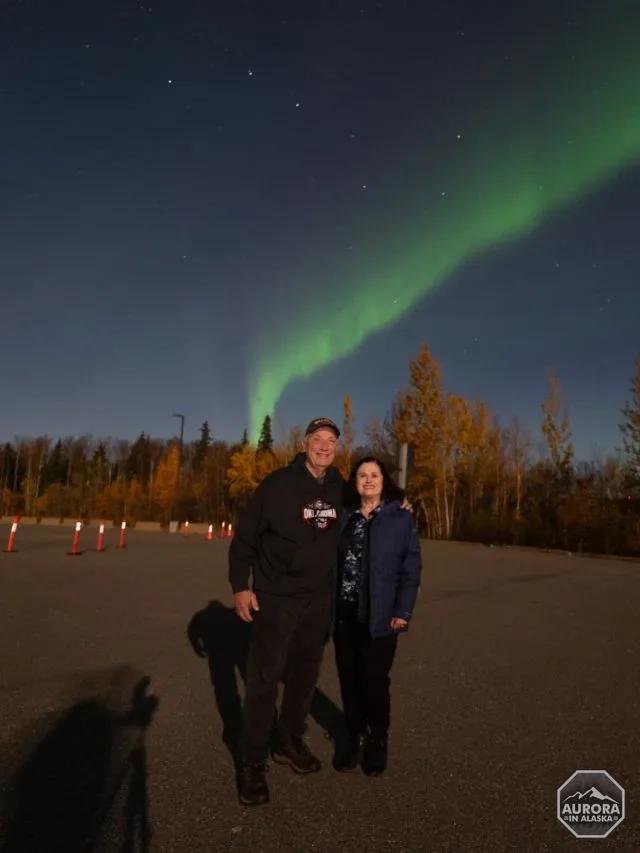
Today's phones take impressive night photos, and we'll show you how to get the most from yours below. But a phone isn't the best tool for a once-in-a-lifetime sky, and it's especially weak at the photo most people want most: themselves, under the aurora.
Phone vs. full-frame camera
Cell Phone Photography vs. Professional Full-Frame Camera Photography
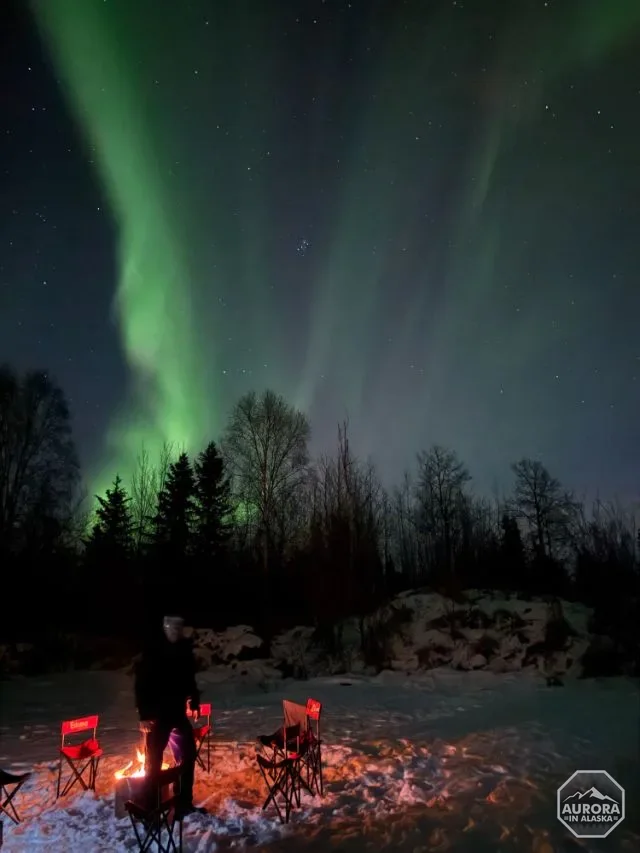
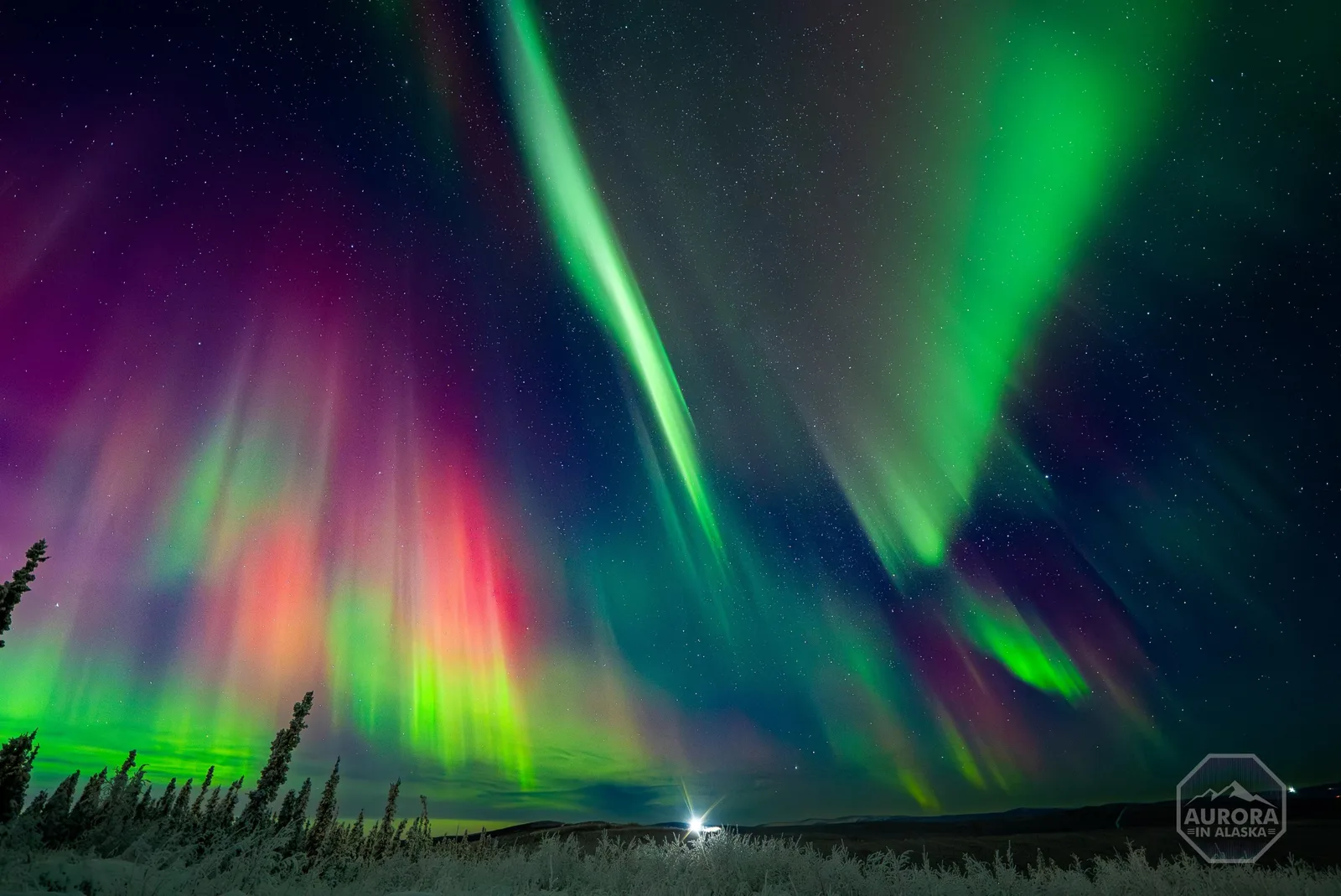
Modern phones offer night modes and clever processing that can produce attractive aurora images. But a phone uses a very small sensor, a compact lens and software to brighten the scene, and that has limits with a constantly changing, low-light subject like the aurora. Paired with a fast, wide-angle lens, a full-frame mirrorless or DSLR camera has five big advantages.
1. Larger Sensors Capture More Light
A full-frame sensor is many times larger than a phone's. In the dark, that means cleaner images, richer color, and detail in the shadows instead of digital noise.
2. Fast Wide-Angle Lenses Make a Difference
Aurora photography loves wide-angle lenses at f/1.4 to f/2.8: more sky, more stars, more landscape, and more light reaching the sensor.
3. Manual Camera Settings Give Photographers More Control
ISO, shutter speed, aperture, focus and white balance can all be set by hand and changed as the aurora brightens, fades or starts to dance. A phone guesses; a photographer decides.
4. RAW Photography Preserves More Image Information
Phone pictures are heavily processed and compressed before you ever see them. RAW files from a camera keep far more information for adjusting exposure, recovering shadows and setting natural color.
5. High-Resolution Images You Can Actually Enlarge and Print
A phone photo can look great on a small screen and fall apart on a wall. A full-frame file holds up as a large print or a photo book, a lasting reminder of the trip.
Why Professional Northern Lights Photography Matters
Seeing the aurora with your own eyes is extraordinary. Capturing it in a photo that does it justice is another challenge entirely. It takes more than an expensive camera: exposure, focusing in darkness, the right lens, adjusting settings as the aurora changes, and working in extreme low light.
It also takes experience. The aurora can appear suddenly, change intensity, move fast, or disappear as quickly as it arrived. Having someone who understands low-light photography makes a real difference in the photos you take home.
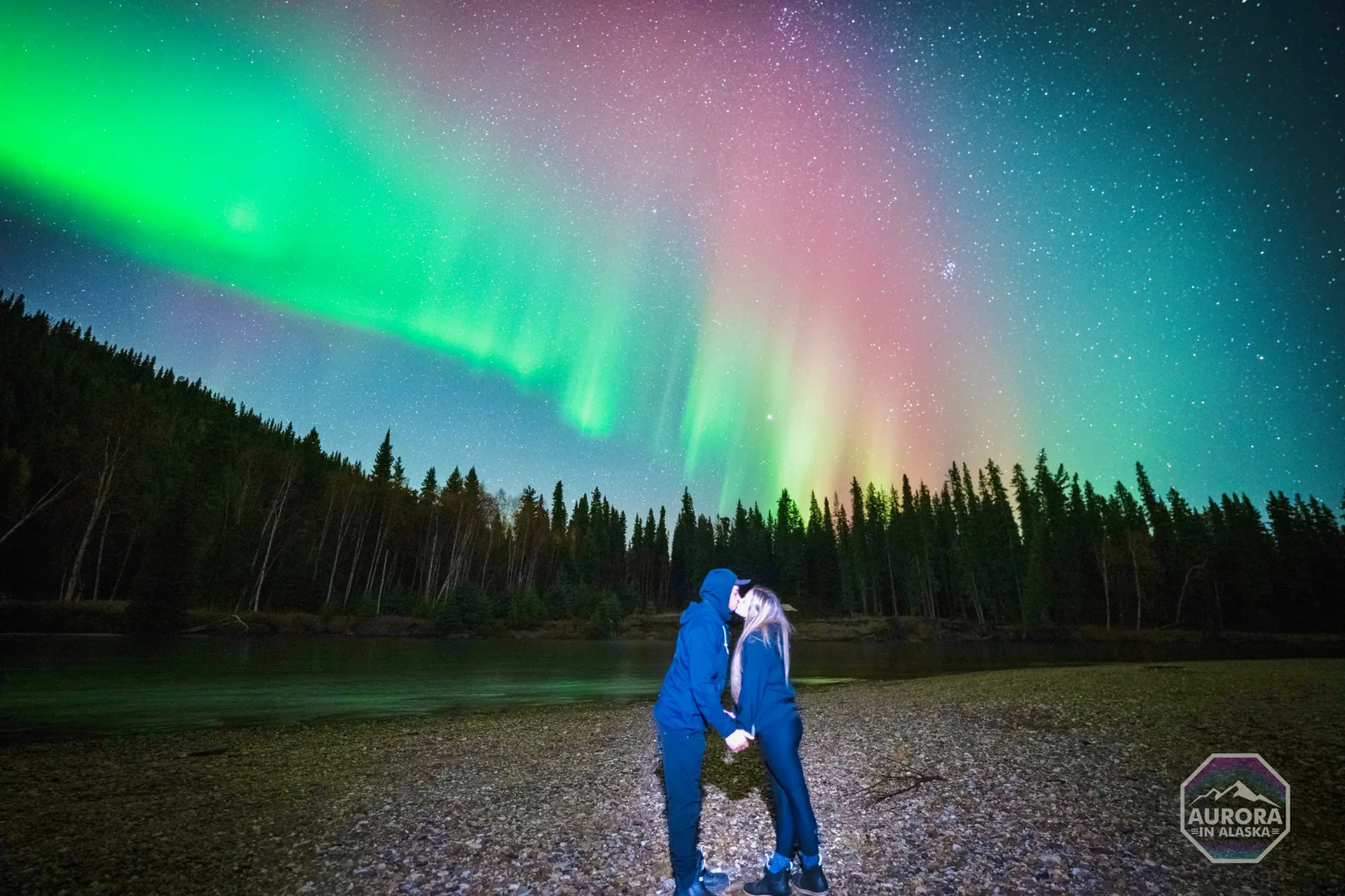
How SkyChase handles it
Experience the Alaska Northern Lights With SkyChase by Aurora In Alaska
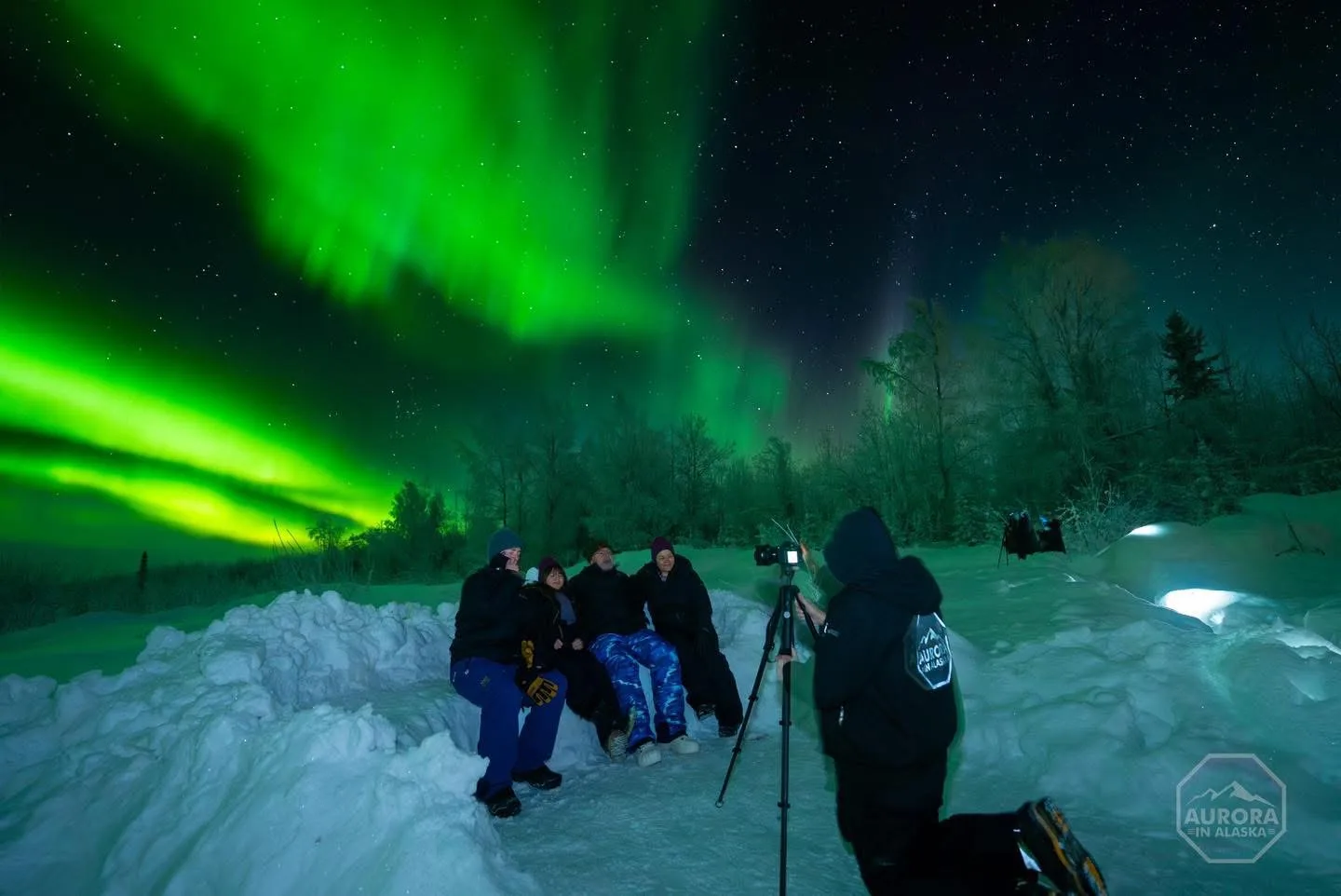
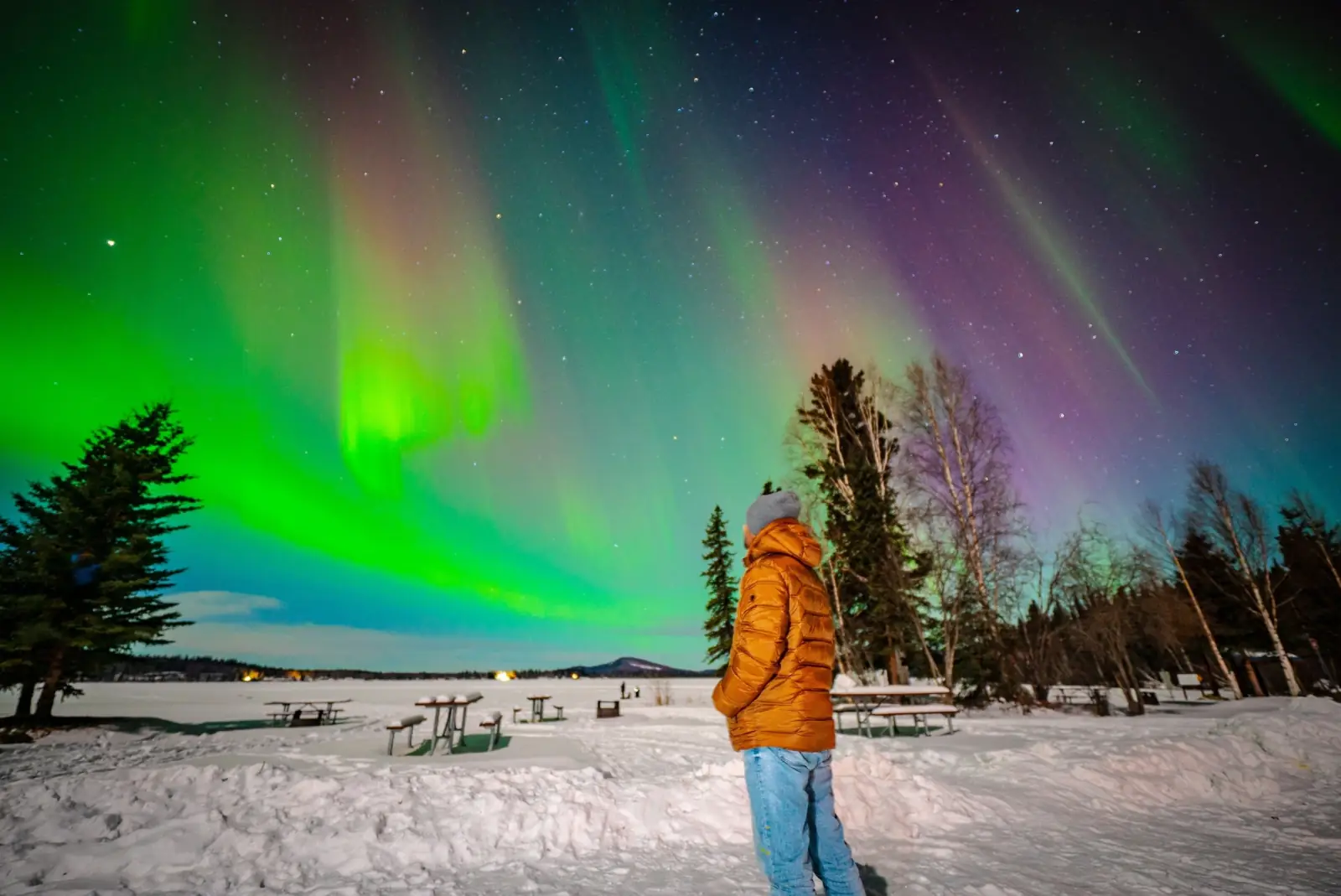
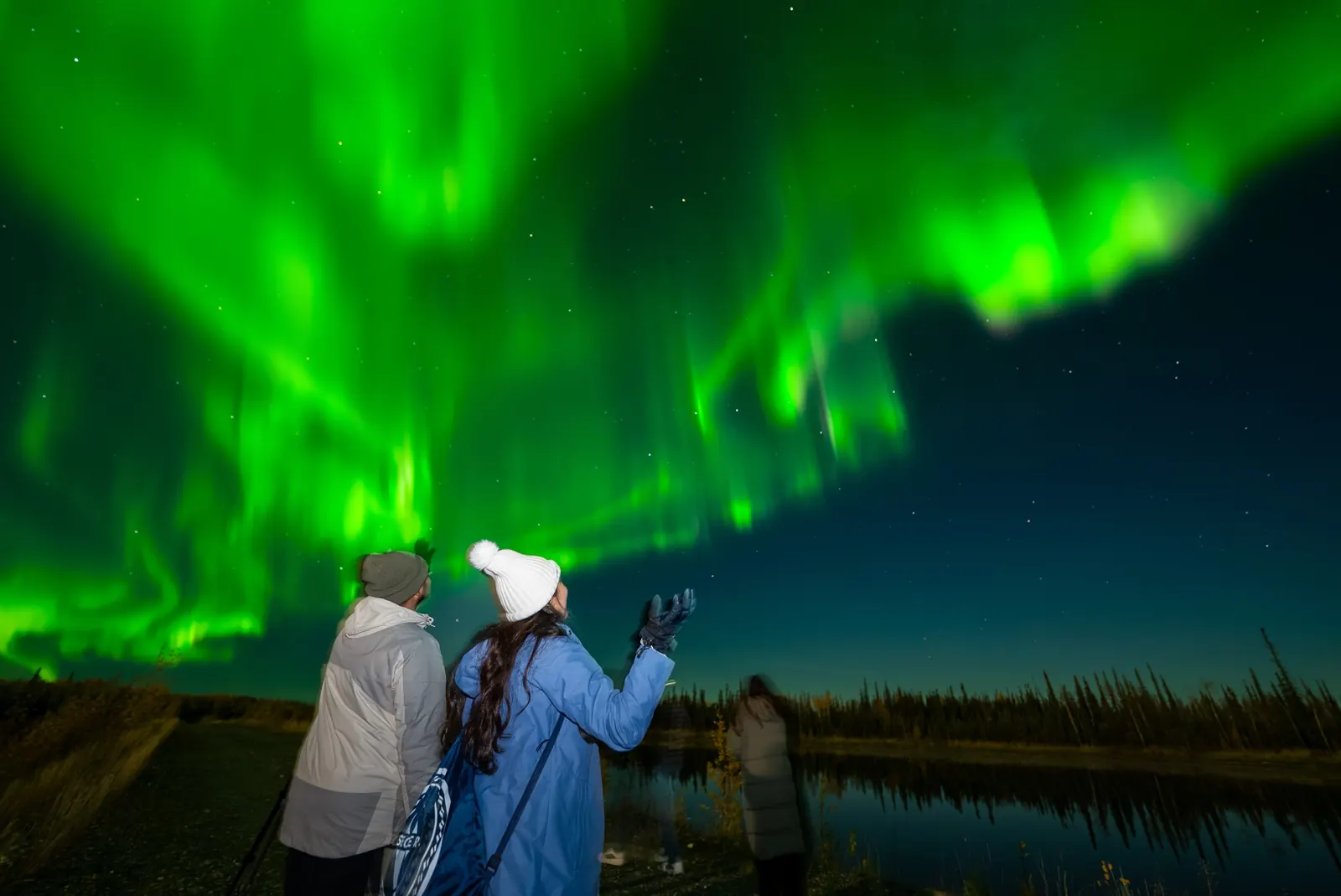
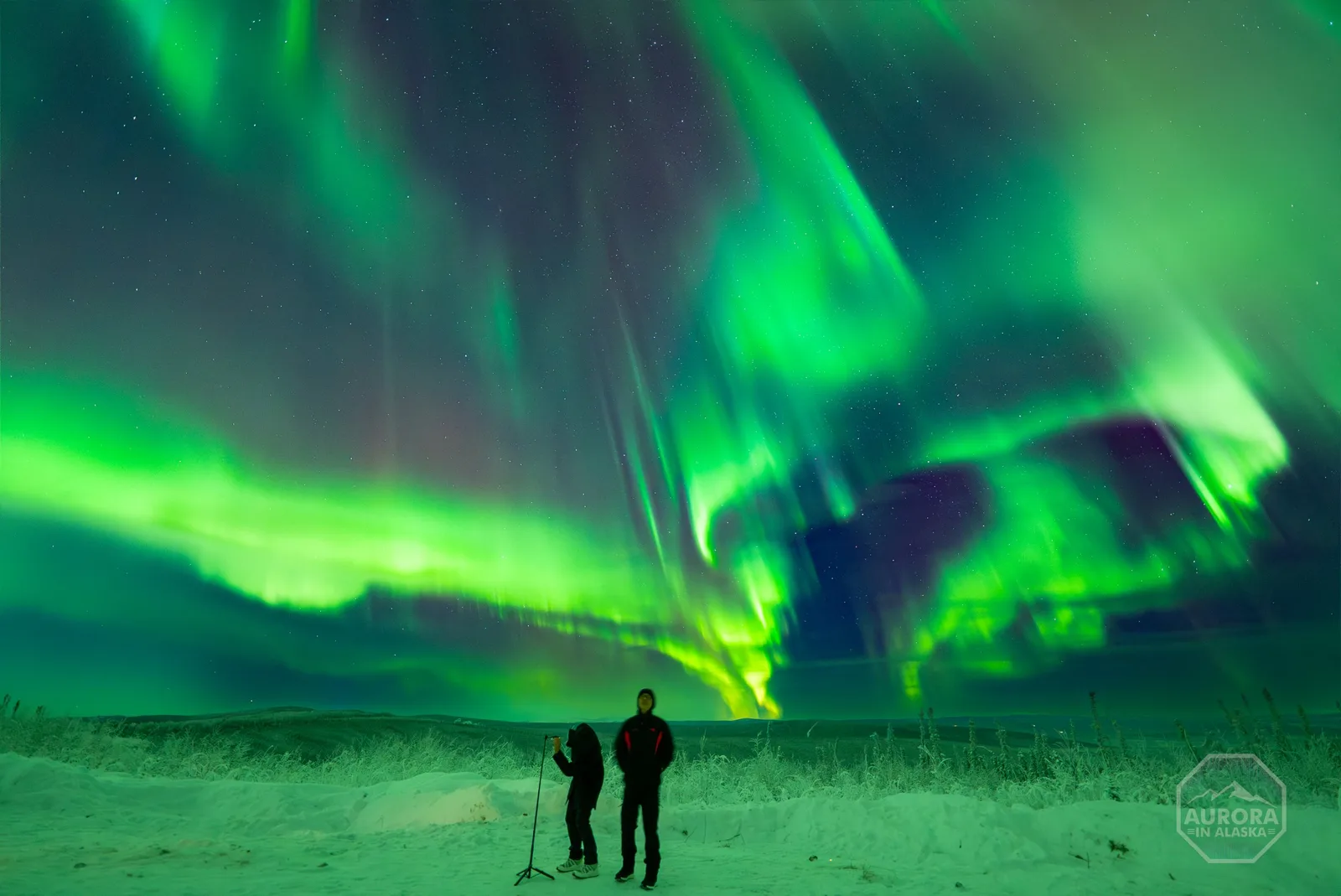
On every SkyChase tour, guides who shoot with full-frame low-light cameras every night take unlimited portraits of you under the aurora. They set up the shot, light you just enough, and time it with the sky, so you don't have to figure out settings with frozen fingers.
Unedited photos are included at no extra cost. And if you want your own shots too, your guide will help set up your phone or camera.
“He took pictures galore for all of us and even helped me with my settings so I could take my own.”
Rachel A. · Viator review · Dec 2024Settings that work
Northern Lights Camera Settings That Work
Cold-weather tips. Cold drains batteries fast, so keep spares in an inside pocket. When you go back into a warm van, keep your camera in a closed bag until it warms up so it doesn't fog. And don't spend the whole night behind a screen: the best part is seeing it with your own eyes.
Planning your trip? See the best time to come and what to wear.
Don't Spend Thousands Traveling to Alaska and Settle for Ordinary Northern Lights Pictures
You've already invested the time, money and effort to make this trip happen. You may never get another chance to see the aurora under Alaska's skies. Make the most of it.
Your Alaska adventure deserves more than a smartphone snapshot. Bring home photographs worthy of the journey.
Book Your SkyChase Northern Lights Tour
Your journey to see the aurora is an investment. Make the photographs last a lifetime. See SkyChase dates & prices →
Photo questions
Aurora photography, answered.
What are the best camera settings for the northern lights?
Good starting points: manual mode, ISO 1600, your widest aperture (f/1.4–f/2.8), and a 2–8 second exposure on a tripod, with focus set manually on a bright star. Shorten the exposure when the aurora moves fast; lengthen it or raise ISO when it's faint.
Can I photograph the northern lights with my phone?
Yes. Modern phones do surprisingly well: use Night mode on the main (1×) lens, turn the flash off, and keep the phone completely still on a tripod or a steady surface with a 3-second timer. Phones struggle most with fast-moving aurora and with portraits of people in the dark.
Do I need a tripod?
For a camera, yes: aurora exposures last several seconds. For a phone, a small tripod or a steady surface helps a lot. On SkyChase, complimentary tripods are available on request, subject to availability.
Why do my aurora photos look blurry?
Usually one of three things: the camera moved during the exposure, the focus wasn't set on a star, or the exposure was too long for a fast-moving aurora. Brace the camera, focus manually on a bright star, and shorten the exposure when the lights are dancing.
Will someone take photos of us on the tour?
Yes. On SkyChase your guides take unlimited portraits of you under the aurora with full-frame low-light cameras, and unedited photos are included. They'll also help set up your own phone or camera.
 4.9600+ Google reviews
 4.9540+ Tripadvisor reviews
 800+Viator reviews · Badge of Excellence
 2026 FareHarbor Pinnacle Experience AwardOne of 300 tour operators worldwide honored for exceptional growth and top-rated guest reviews.
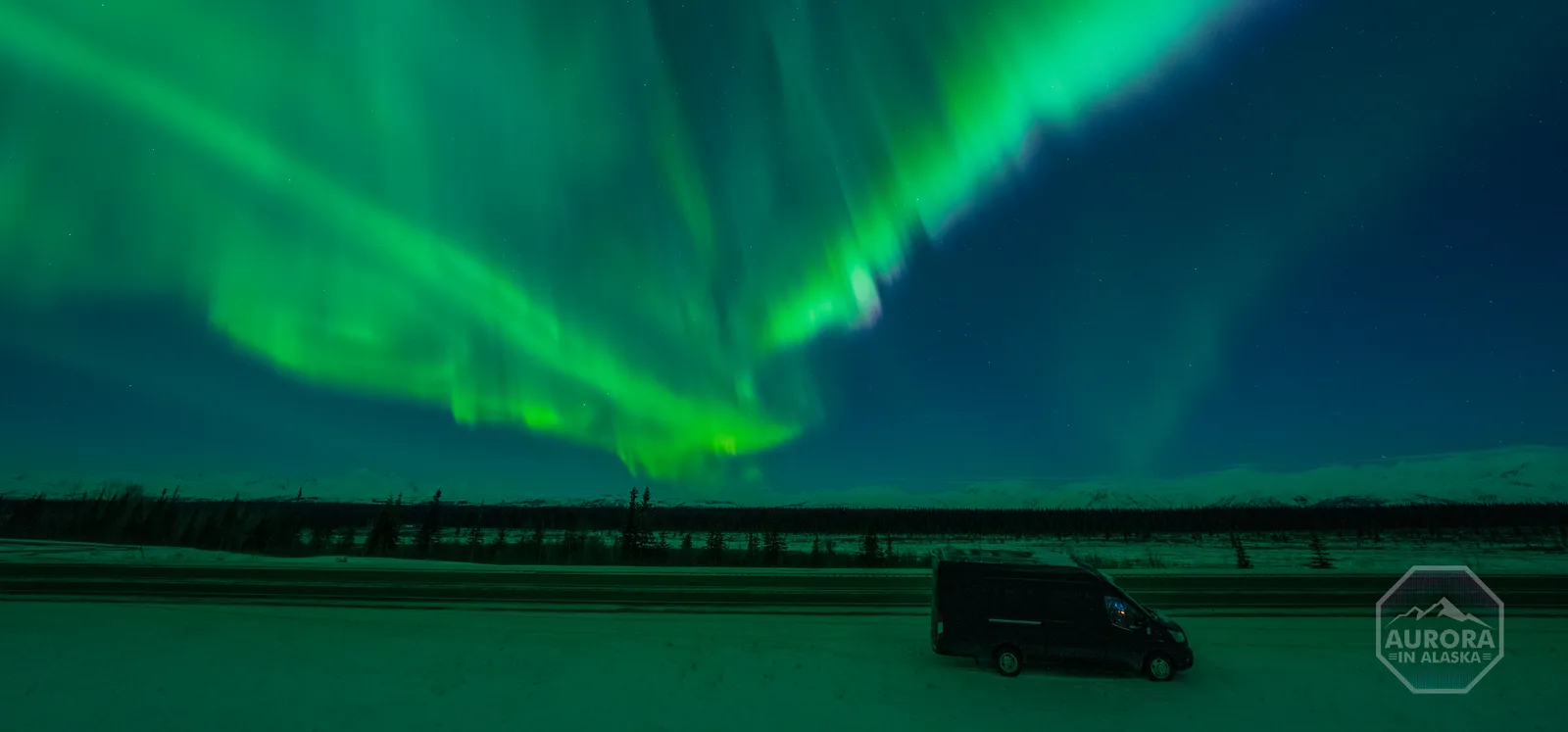 SkyChase™Guided aurora tours from Fairbanks
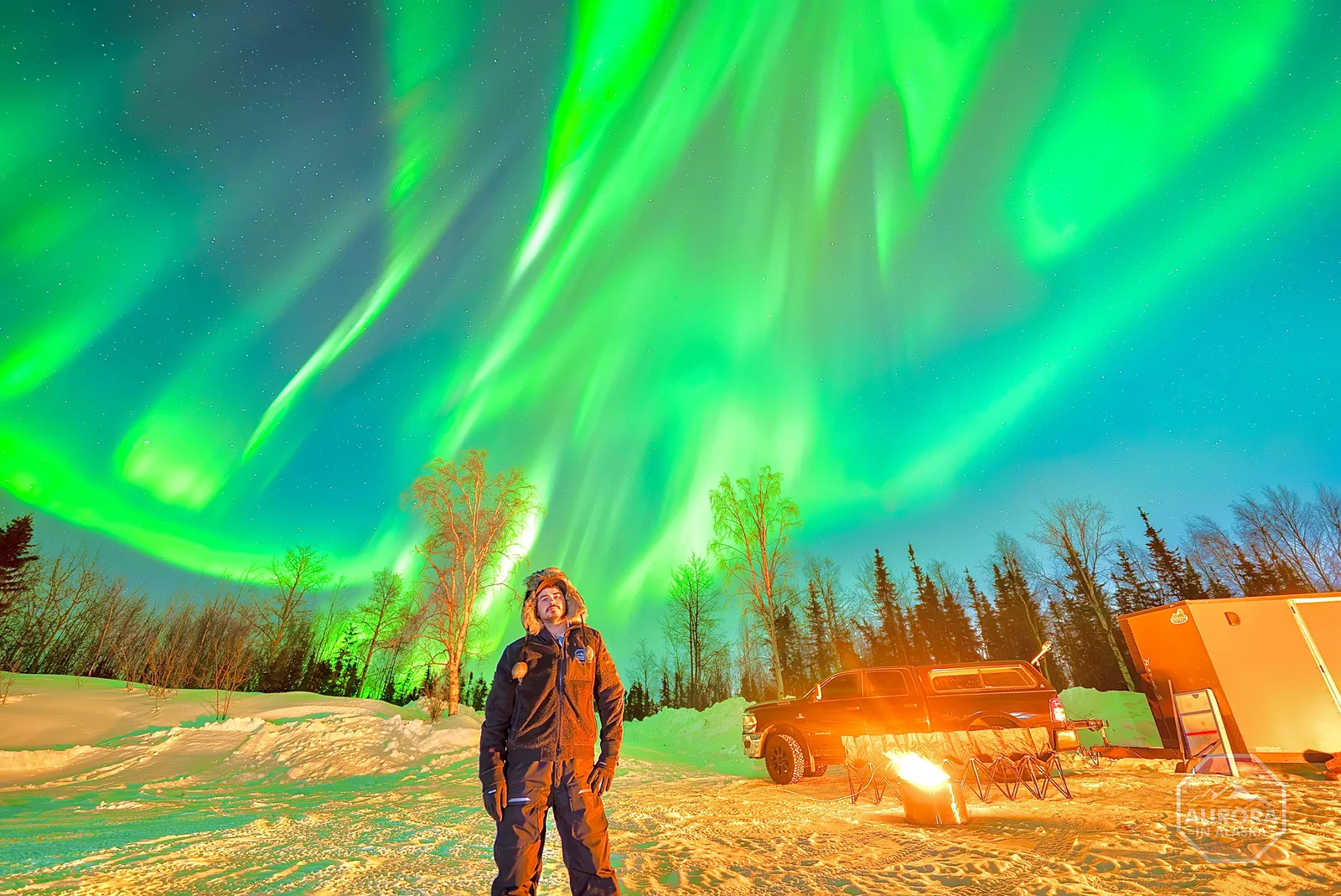 Northern Lights in FairbanksA visitor's guide to seeing the aurora
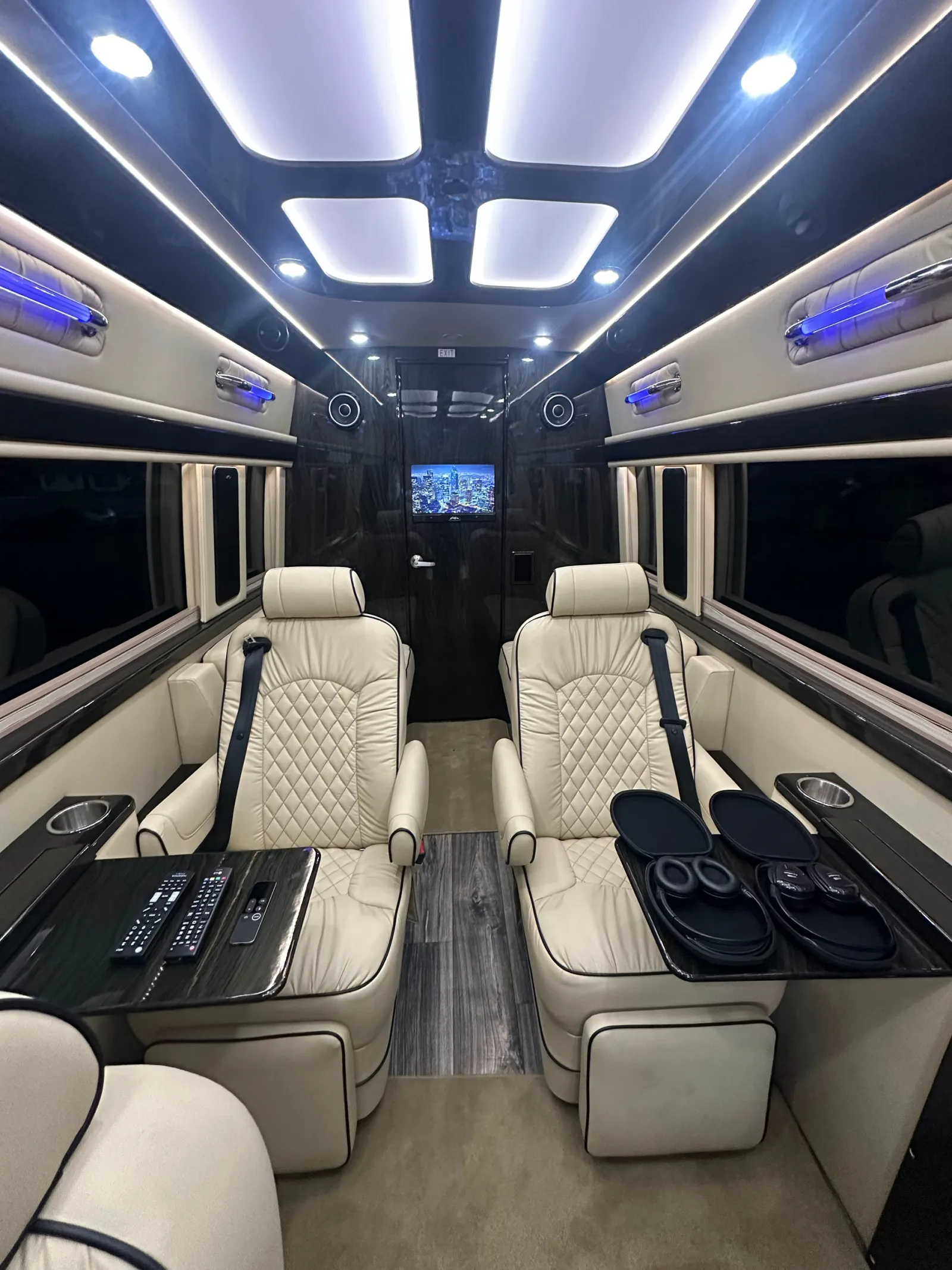 Private SkyChase™Your own luxury Sprinter and photographer
 Best time to goMonth by month, hour by hour
 What to wearDress for an Interior Alaska night
 Aurora GuaranteeWhat happens if the sky doesn't cooperateYour photosPortraits under the aurora, included
 QuestionsStraight answers before you book
Fairbanks, Alaska · 64.8° N
Ready when the sky is.
Questions before you book? Call or text a real person at (907) 931-4000.