Aurora In Alaska / What to wear
What to wear for an Alaska night.
Colder than you think, and you'll be standing still. Dress in layers, protect your feet and hands, and the night is all about the sky.
Next to skin
Merino wool or synthetic long underwear, top and bottom. Cotton holds sweat and gets cold.
The warmth
A fleece or down jacket; fleece or wool pants in deep winter. Add a layer rather than one giant coat.
Stop the wind
An insulated parka with a hood and insulated snow pants or bibs.
Most important
Insulated, waterproof winter boots with room for thick wool socks. Bring a spare pair of socks.
Mittens + liners
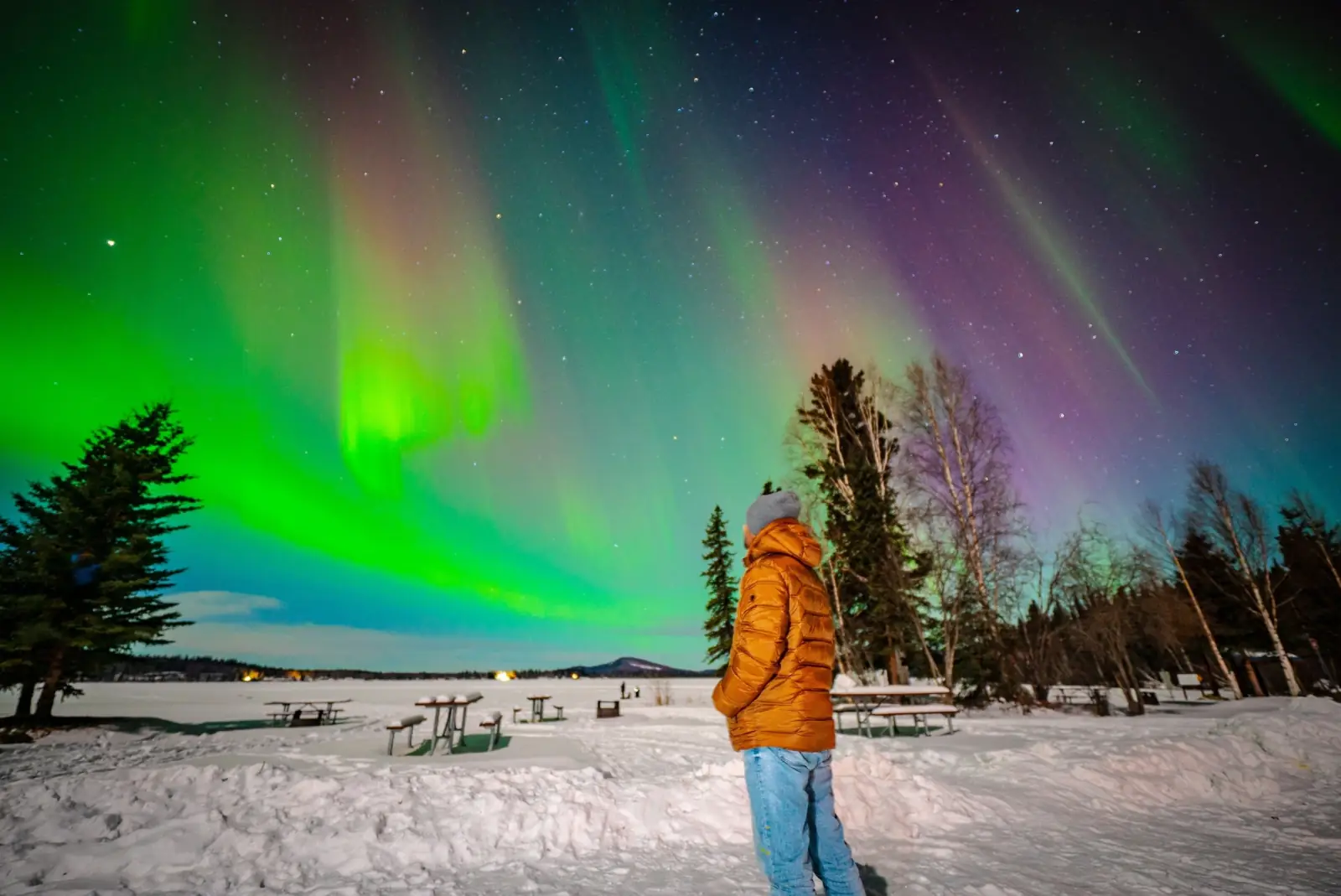
Warm mittens over thin liner gloves, so you can work a phone or camera without bare skin.
Hat & neck
A warm hat that covers your ears and a neck gaiter or scarf you can pull over your face.
By season
How cold, when?
Late August–September: often in the 30s–40s °F at night. A warm jacket, hat, gloves and comfortable shoes or light boots are usually enough.
October and April: teens to 20s °F, snow on the ground. Full winter layers and proper boots.
November–March: commonly below zero, sometimes −20 °F to −40 °F. Everything on this page, plus hand and toe warmers. Cover all skin when it's very cold.
Check the live temperature on ANN the day of your tour.
“The mobile lodge with wood stove kept us warm while we would wait for activity, then could quickly step outside and see the northern lights when they were most active.”
Justin H. · Viator review · Dec 2025Packing list
Bring this.
- Base layers, top and bottom (wool or synthetic)
- Fleece or down mid-layer
- Insulated parka with hood, and insulated snow pants or bibs
- Insulated waterproof winter boots, thick wool socks, and a spare pair
- Warm mittens plus thin liner gloves
- Warm hat and neck gaiter or scarf
- Hand and toe warmers for winter nights
- Charged phone and a small battery pack, kept in an inside pocket
- Your camera and spare batteries, if you're bringing one (tripods available on request)
- Any medications you might need during a late night
Quick answers
Staying warm.
How cold is a northern lights tour in Fairbanks?
It depends on the month. September nights are often in the 30s °F; mid-winter nights are commonly well below zero, sometimes −20 °F to −40 °F. You'll be outside, standing still, for long stretches, which feels colder than walking around town.
Do I need special boots?
Your feet get cold first. In winter, insulated, waterproof winter boots with room for thick wool socks are the single most important thing to bring. Tight boots get cold faster.
Where can I warm up during the tour?
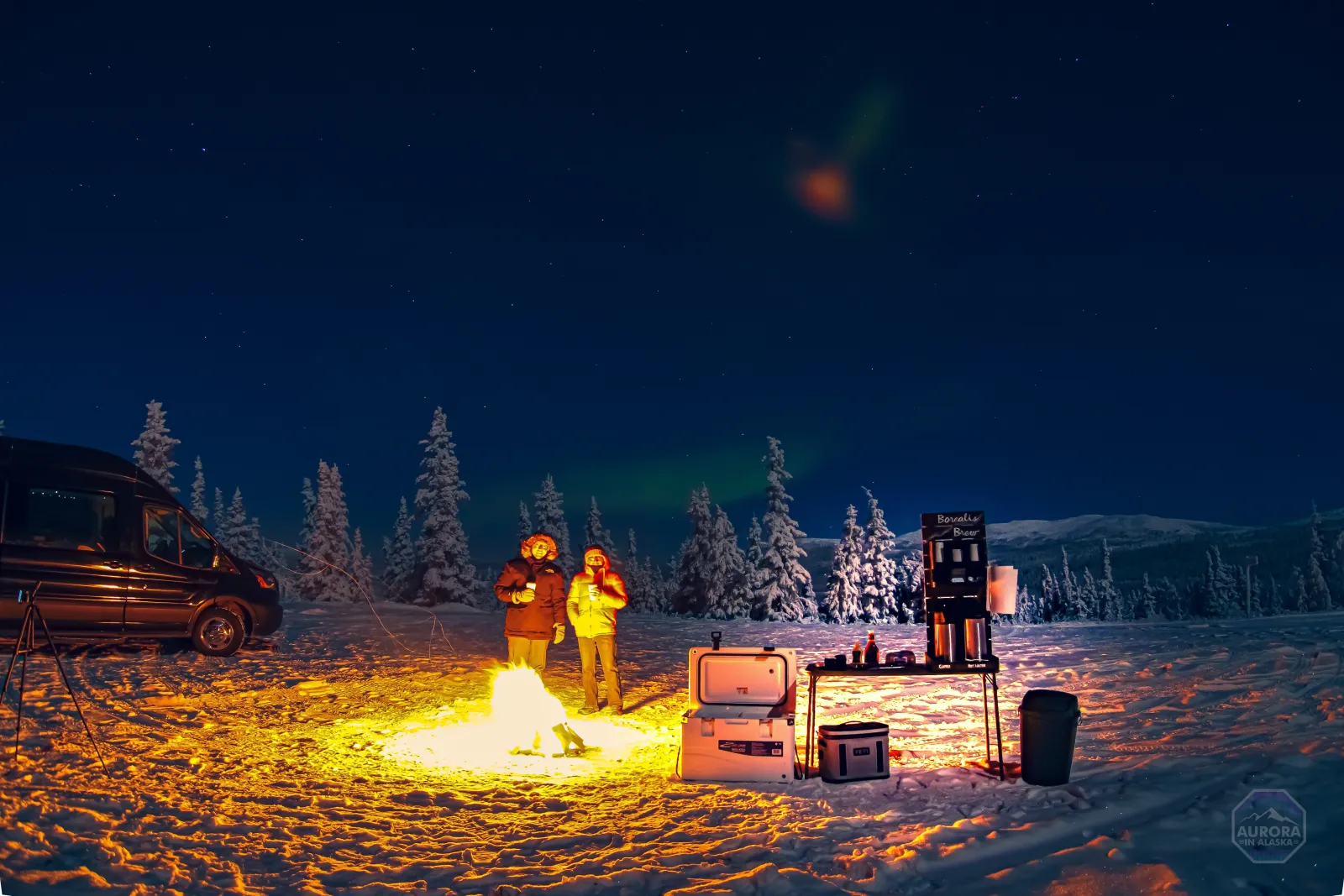
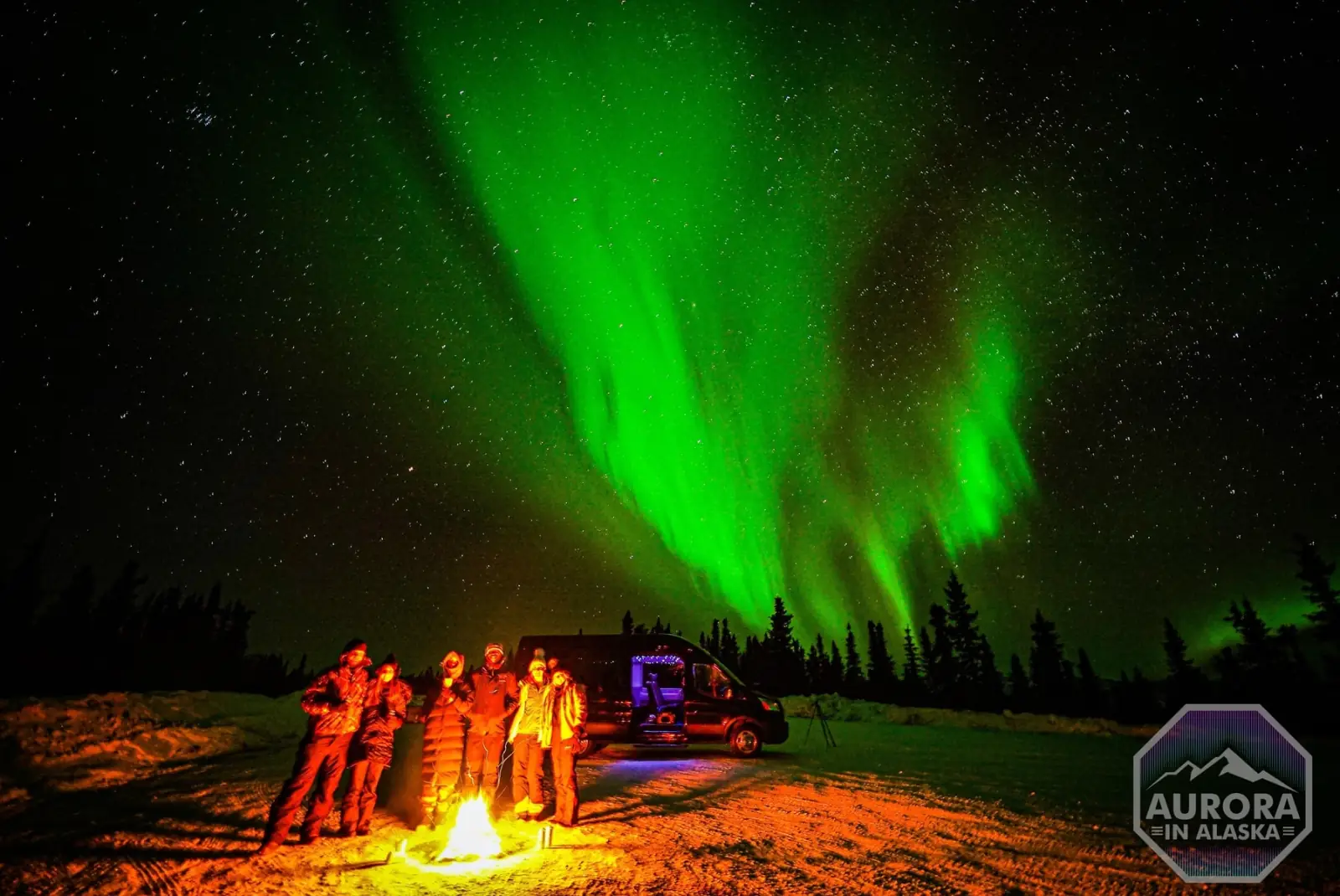
In the heated van, by the fire, and in the Mobile Lodge on nights it travels with us. Private SkyChase guests have their own heated Sprinter.
Will my phone work in the cold?
Cold drains batteries fast. Bring a charged phone and a small battery pack, and keep both in an inside pocket close to your body until you need them.
 SkyChase™The guided Northern Lights chase from Fairbanks
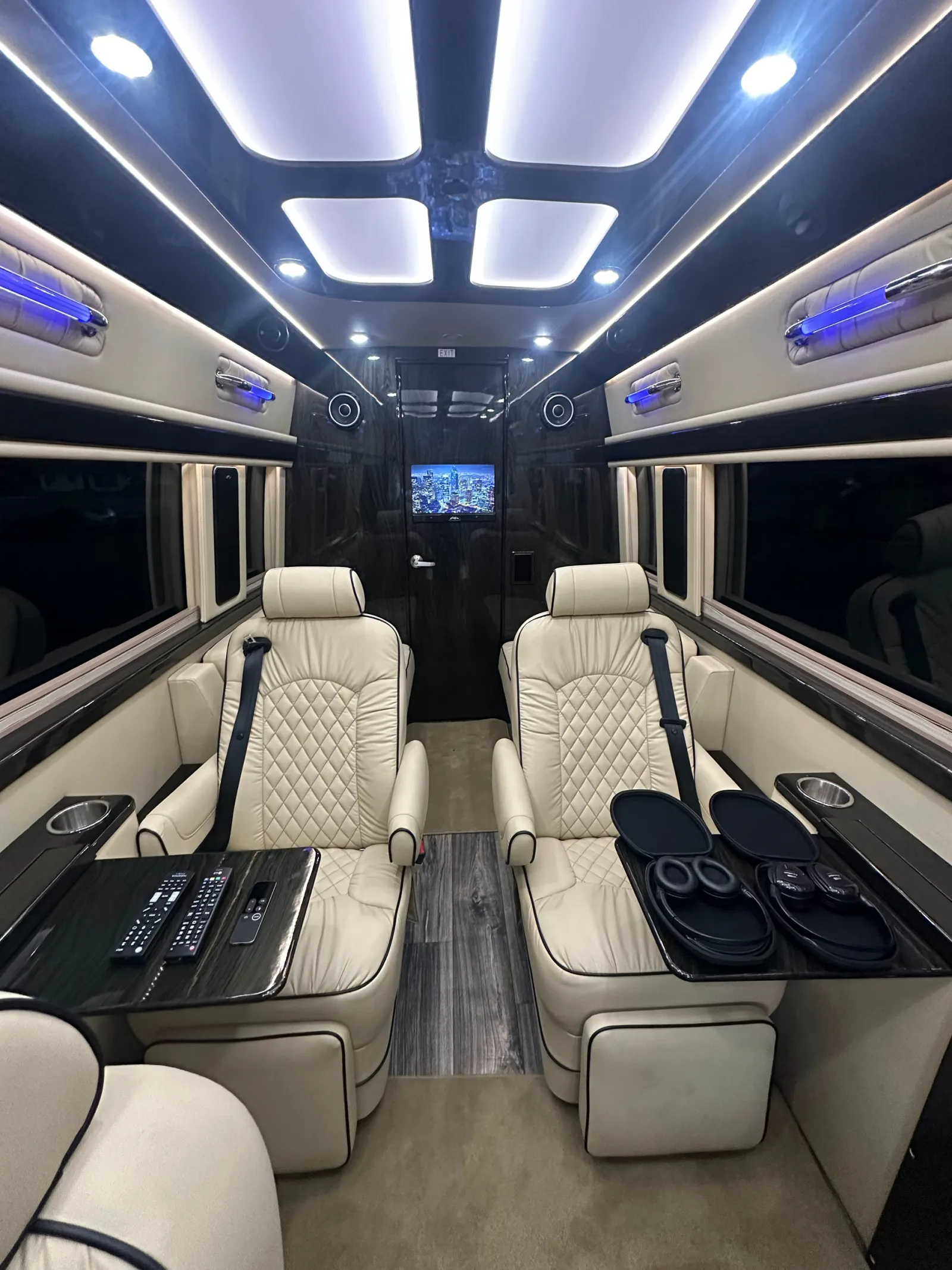 Private SkyChase™Your own luxury Sprinter and photographer
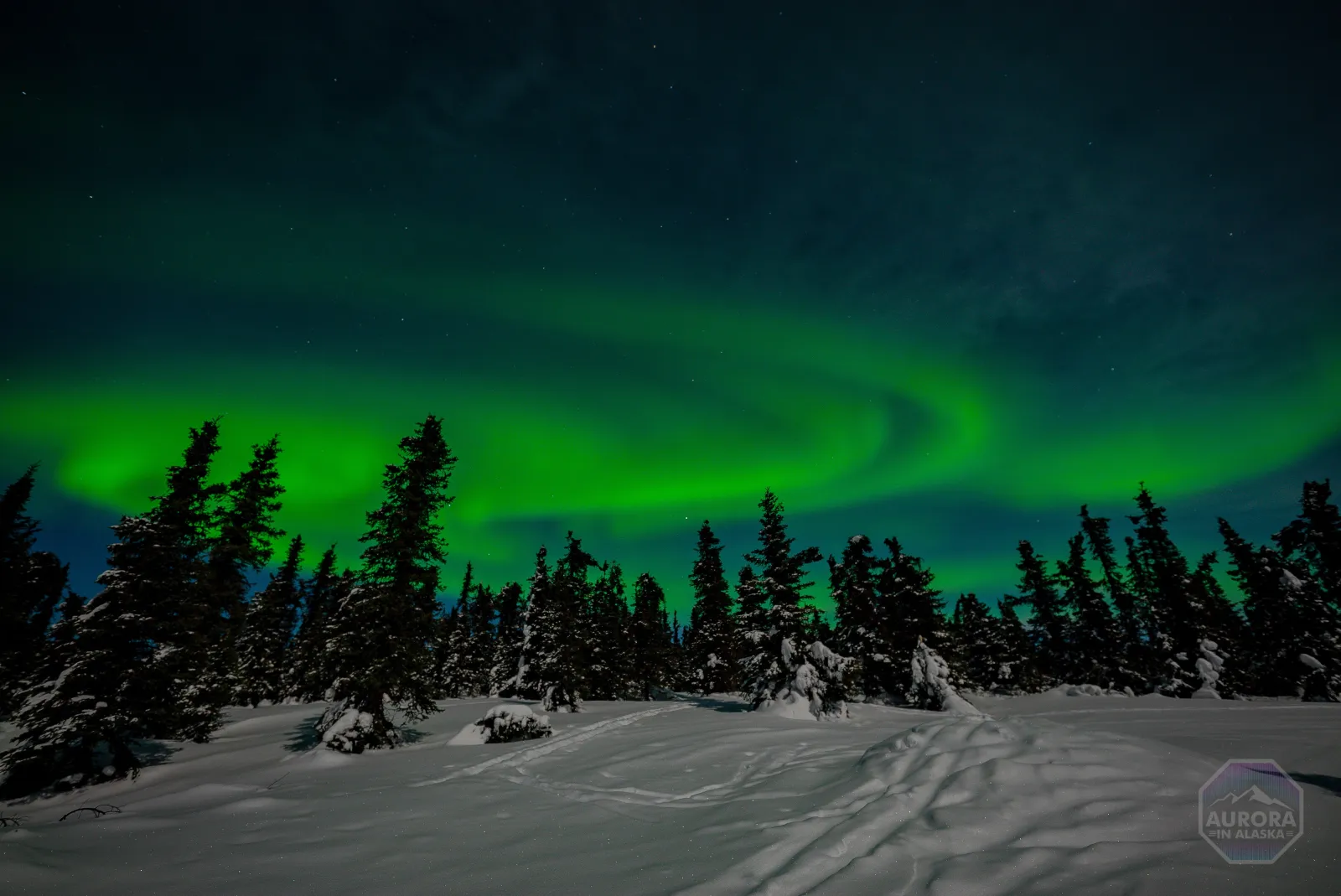 Best time to goMonth by month, hour by hour
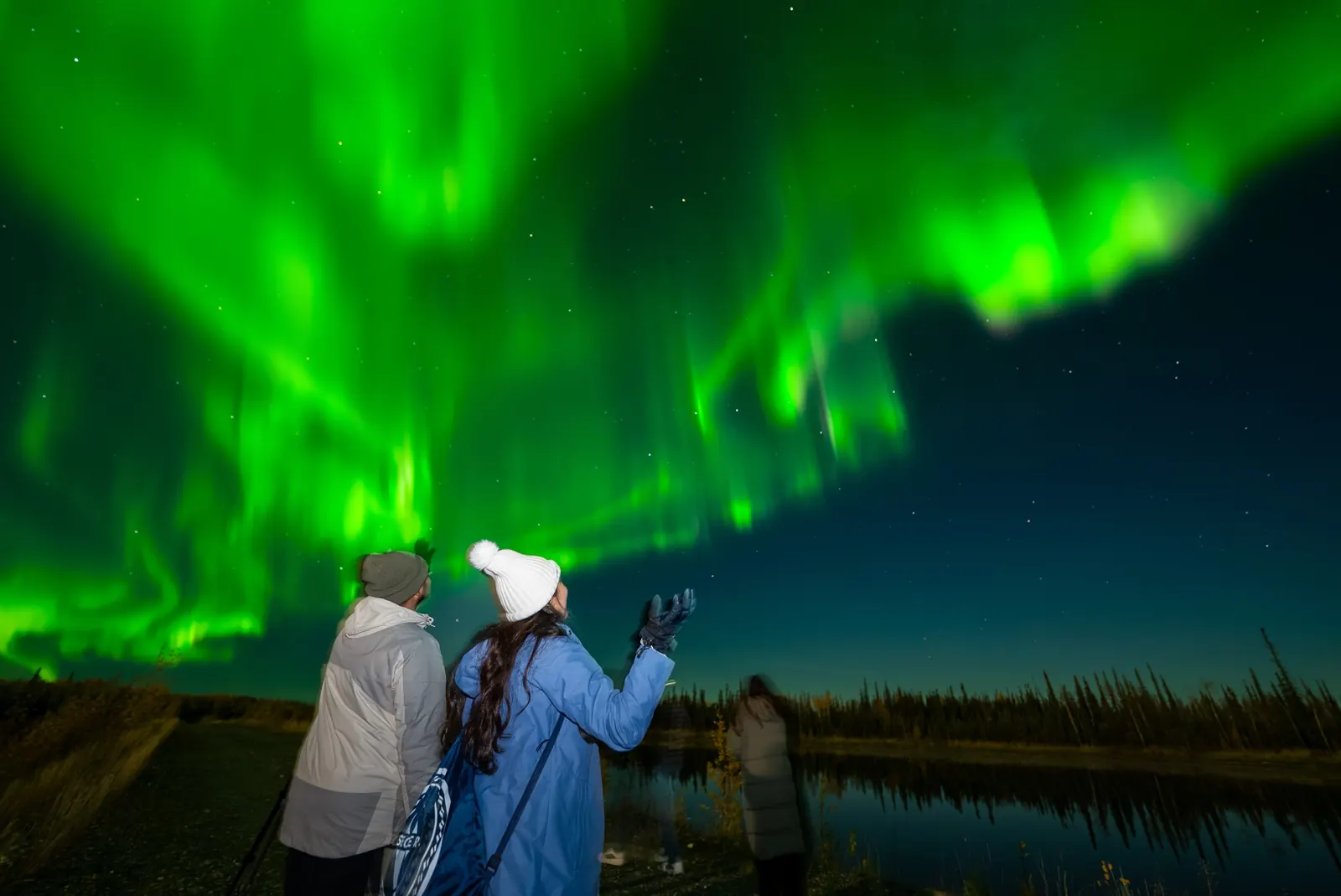 Aurora GuaranteeWhat happens if the sky doesn't cooperate
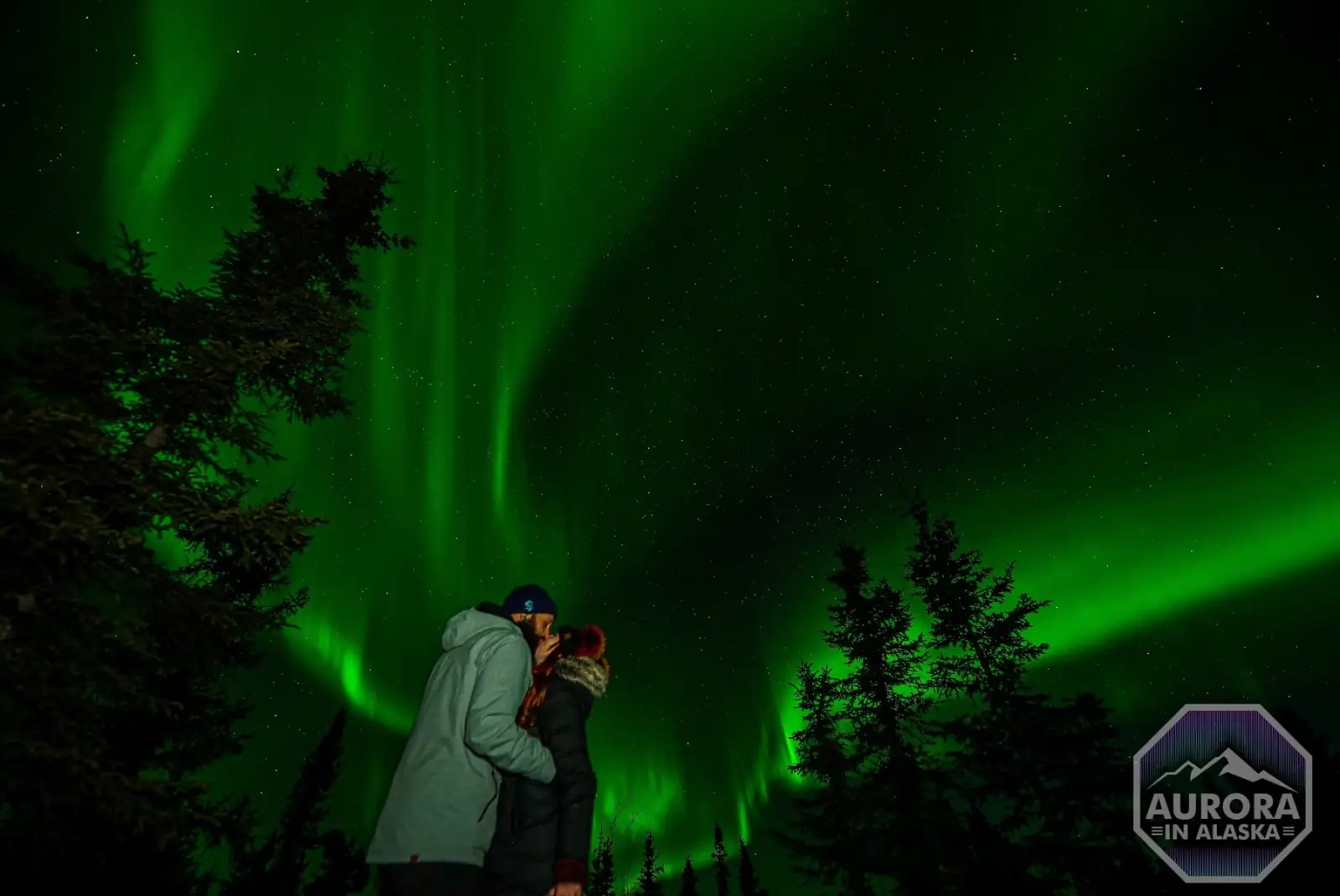 Your photosPortraits under the aurora, included
 QuestionsStraight answers before you book
Fairbanks, Alaska · 64.8° N
Ready when the sky is.
Questions before you book? Call or text a real person at (907) 931-4000.