
Aurora In Alaska / Best time to see the Northern Lights
When to see the Northern Lights in Fairbanks.
Short answer: late August to mid-April, between about 10 PM and 3 AM, and for three or more nights. Here's how to choose, from guides who are out under this sky every night of the season.
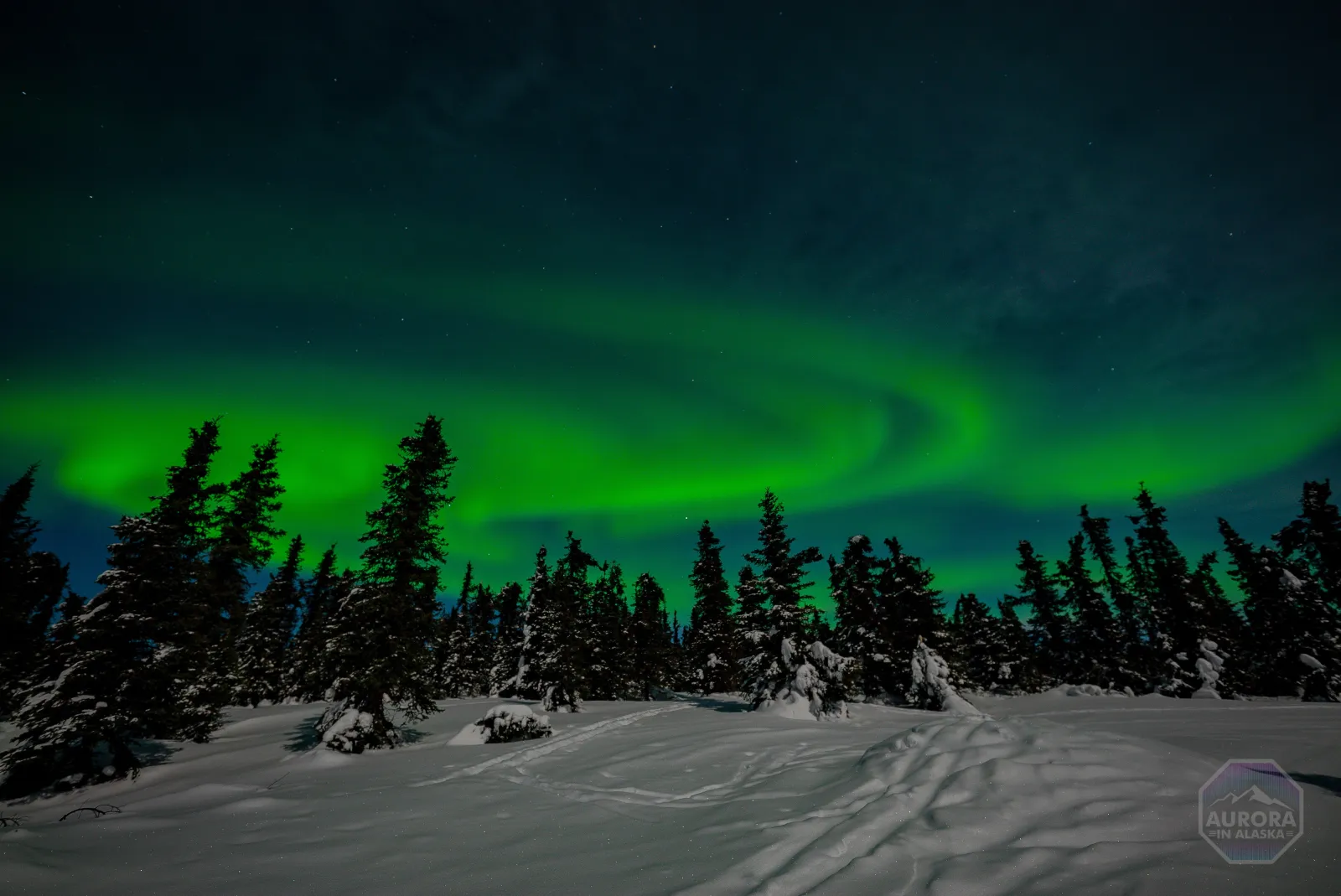
Fairbanks sits almost directly under the auroral oval, the ring around the magnetic pole where the Northern Lights happen most. That's why it's one of the best places on Earth to see them. In town, the aurora shows up on most dark, clear nights, even when the forecast calls it quiet.
So the question isn't really "will there be aurora?" It's three others: Is it dark? Is it clear? Can you stay warm and awake long enough? The month you pick changes all three.
Month by month
Darkness, cold and clouds.
Typical overnight temperatures are rough Fairbanks averages; any given night can be much colder or warmer. For real history by date, try ANN's trip planner.
| Month | Darkness | Typical night | Good to know |
|---|---|---|---|
| Late Aug | Short, just returning | 40s °F | Season opens. Late nights only; green over still-green trees. |
| September | Growing fast | 30s °F | Lakes and rivers still open for reflections. Fall color. Equinox often brings lively nights. |
| October | Long | Teens–20s °F | First snow. Water starts freezing. Comfortable for most visitors. |
| November | Very long | Around 0 °F | Cold arrives. Clouds can be more frequent; chasing pays off. |
| December | Longest of the year | Below zero, often −20s °F | Only a few hours of daylight. Deep cold; holiday crowds. |
| January | Very long | Often −20s °F, can hit −40 °F | Coldest month. Snowy, spruce-and-frost scenes. |
| February | Long | Below zero, warming late | Popular. Days lengthen; nights still long. |
| March | Long, then shortening | Around 0 °F to teens | Often clearer, drier skies and milder nights. Spring equinox boost. A visitor favorite. |
| Early–mid Apr | Shrinking fast | Teens–20s °F | Season closes. Late nights only, deep snow still on the ground. |
Time of night
Stay up past midnight.
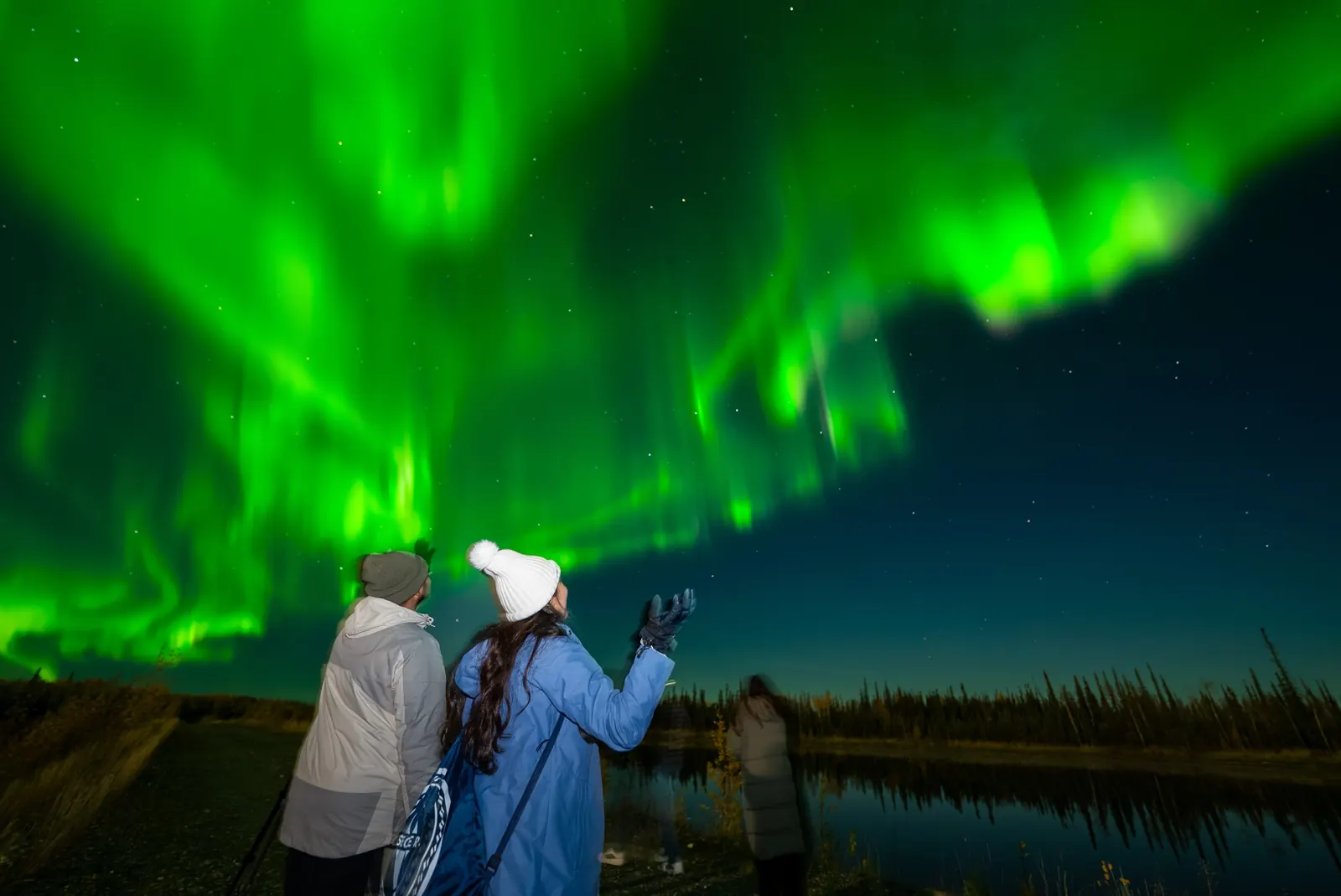
Most nights, the best viewing window is about 10 PM to 3 AM, with activity often strongest around midnight to 2 AM. The aurora comes in waves: it can glow quietly for an hour, then surge across the whole sky for ten minutes.
That's why we stay out, keep watch while you warm up, and call you out when it builds. Many of our guests' best moments come after 1 AM.
“The Aurora appeared on 9/13 at 2:14 am We cried!”
Lori B. · Viator review · Sep 2023What actually decides your night
Clouds beat Kp, every time.
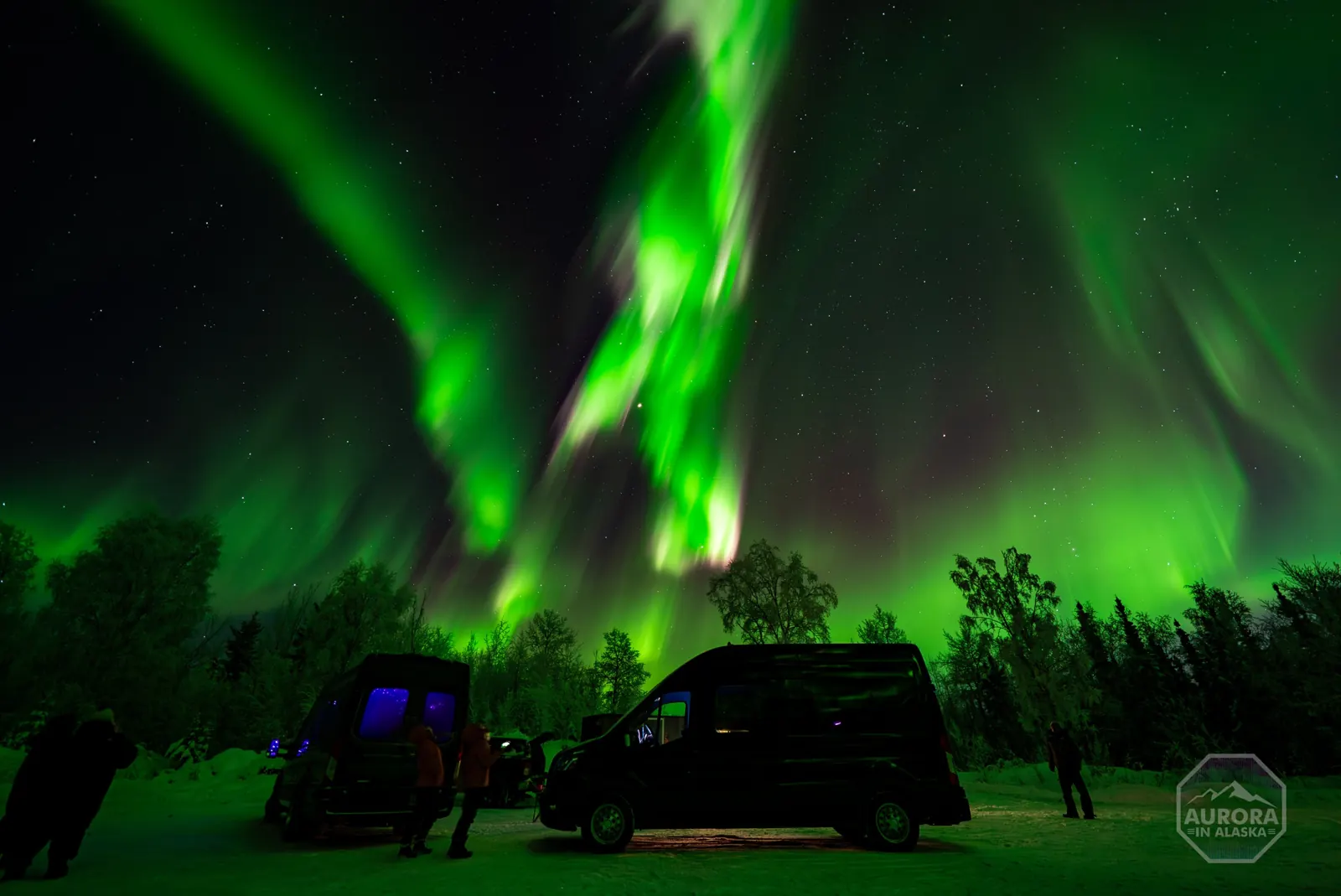
Clouds. The biggest reason people miss the aurora in Fairbanks is cloud cover, not a quiet Sun. Clouds are often patchy: it can be overcast in town and clear an hour away. That's the whole idea behind chasing: our guides watch the models, the satellite and live sky cameras, then drive to the opening.
City glow. Fairbanks' lights wash out fainter aurora. Getting past them makes a dramatic difference, even on a clear night.
The Kp index. Kp is a global, three-hour average of geomagnetic activity. It matters a lot for places farther south. In Fairbanks, under the oval, the lights are often overhead on low-Kp nights. What happens in the solar wind right now, especially when its magnetic field turns south, matters more. ANN explains why Kp isn't the whole story.
The moon. A bright moon can hide a faint aurora but won't hide a strong one, and it lights the landscape for photos. Darker moon phases help on quiet nights.
“We are so glad we didn't cancel on a night that predicted only a 10% chance of seeing the Lights.”
Sherrie S. · Viator review · Feb 2023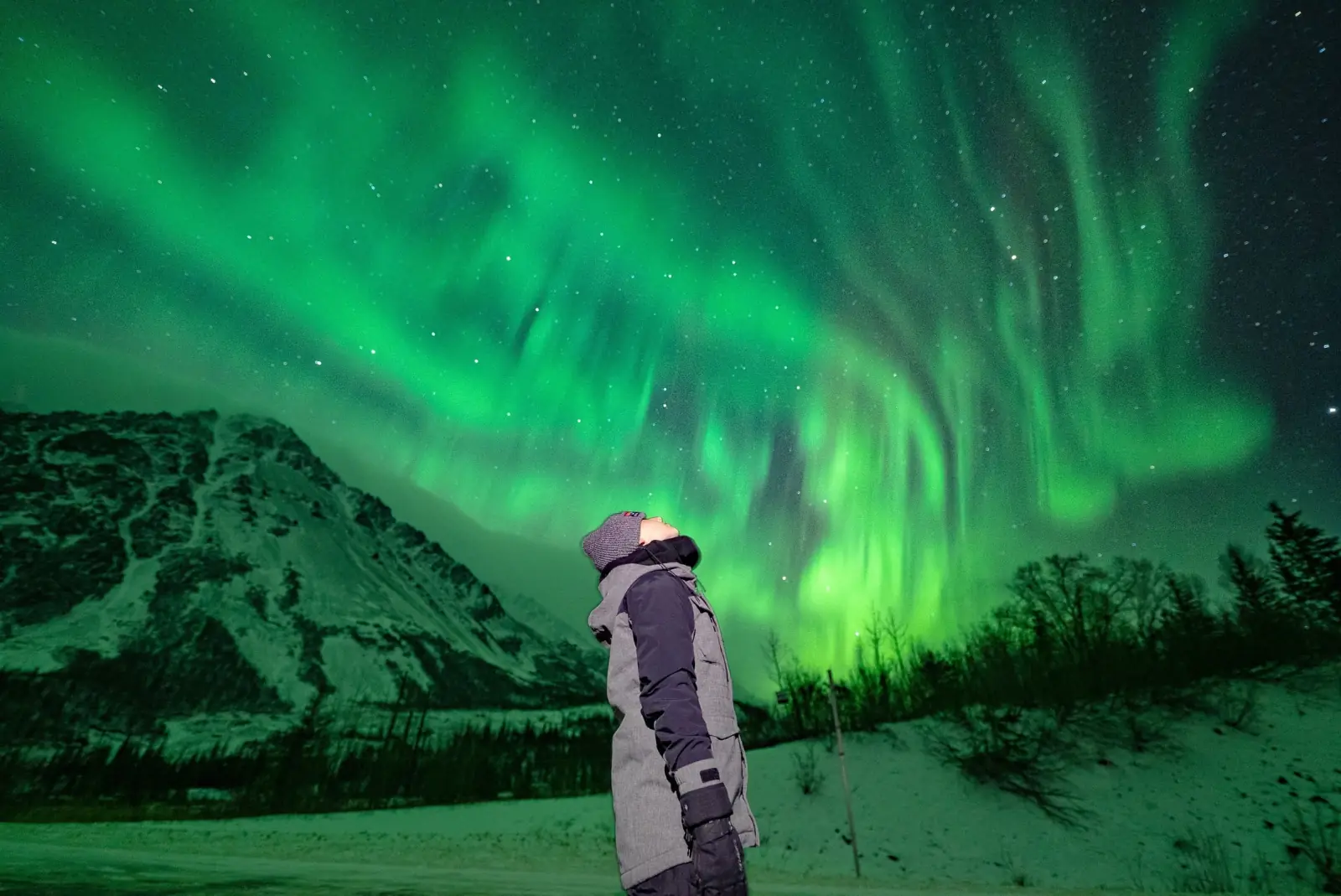
Planning your trip
More nights, better odds.
Plan three or more nights in Fairbanks if you can. Explore Fairbanks says the aurora is visible on average four out of five nights when the sky is clear and dark enough; extra nights give the weather more chances to cooperate.
Book your tour early in your stay. If the first night is cloudy, you still have time, and when you book SkyChase direct you can request standby on any night in the seven days after your tour.
Check the live sky on ANN, our free Fairbanks aurora forecast, before and during your trip.
Quick answers
Best time, answered.
What is the best month to see the northern lights in Fairbanks?
There isn't one best month, because the aurora is common all season. What changes is darkness, cold and clouds. For most visitors late February through March (long dark nights, often clearer skies, milder than mid-winter) and September (comfortable temperatures, open water for reflections) are the sweet spots. December and January have the longest nights and the deepest cold.
When is aurora season in Fairbanks?
Roughly late August to mid-April. Outside that window the sky never gets dark enough. Explore Fairbanks lists the season as August 21 to April 21.
What time of night is best?
Plan on about 10 PM to 3 AM. Activity often peaks around midnight to 2 AM, but it can surge at any time after dark, which is why our guides stay out and keep watch.
How many nights should I plan?
Three or more. Clouds are the main reason people miss the aurora, and every extra night gives the weather another chance. Explore Fairbanks says the aurora is visible on average four out of five nights when the sky is clear and dark enough.
Does the Kp index need to be high in Fairbanks?
No. Fairbanks sits under the auroral oval, so the lights are often overhead even on quiet, low-Kp nights. Kp matters far more for places farther south. Clear, dark sky matters most here.
Does a full moon ruin the aurora?
No. Bright moonlight can wash out a faint aurora, but a moderate or strong display still shows clearly, and moonlight lights up the snow and trees for beautiful photos. Darker moon phases help with fainter nights.
 SkyChase™The guided Northern Lights chase from Fairbanks
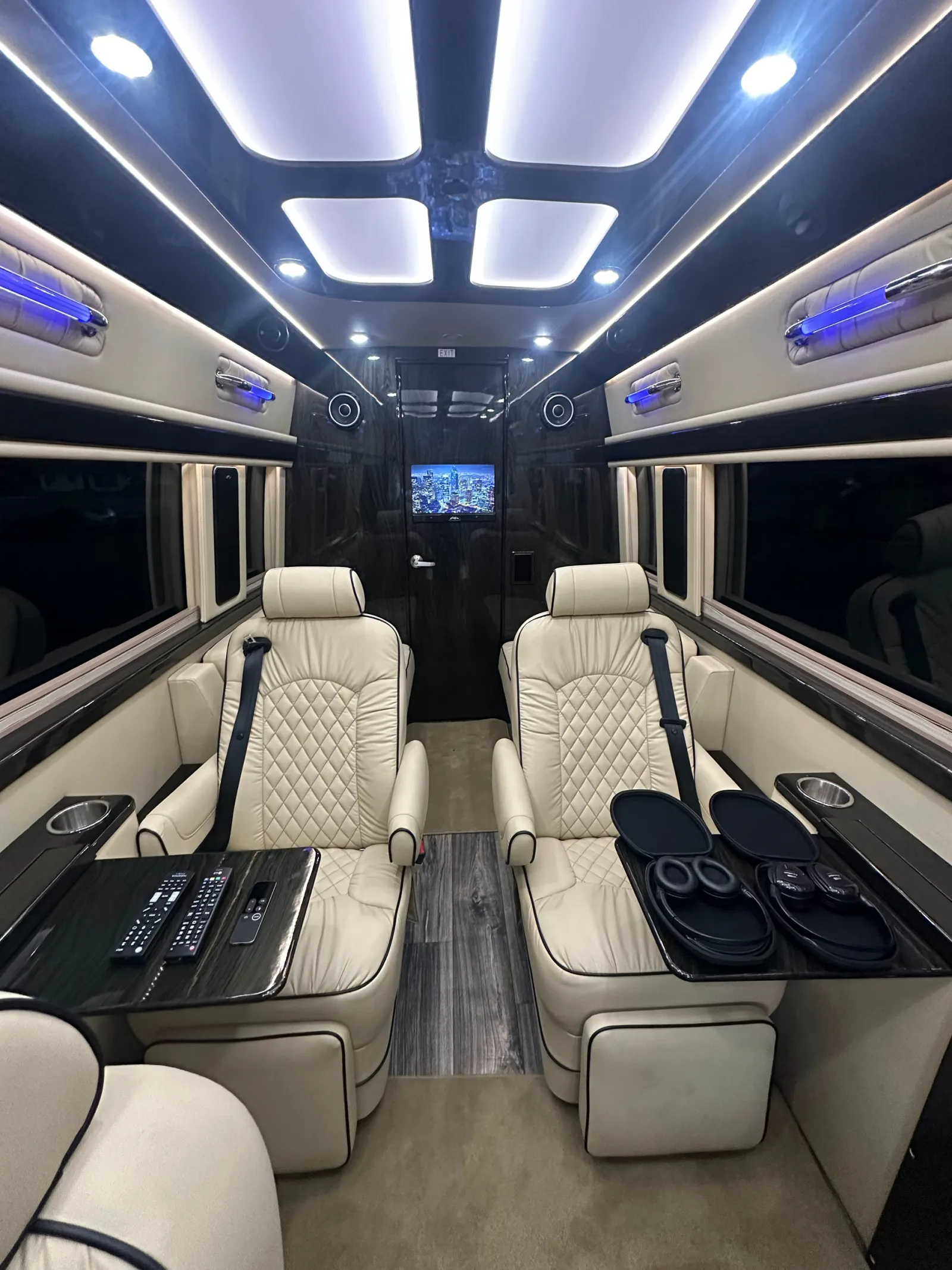 Private SkyChase™Your own luxury Sprinter and photographer
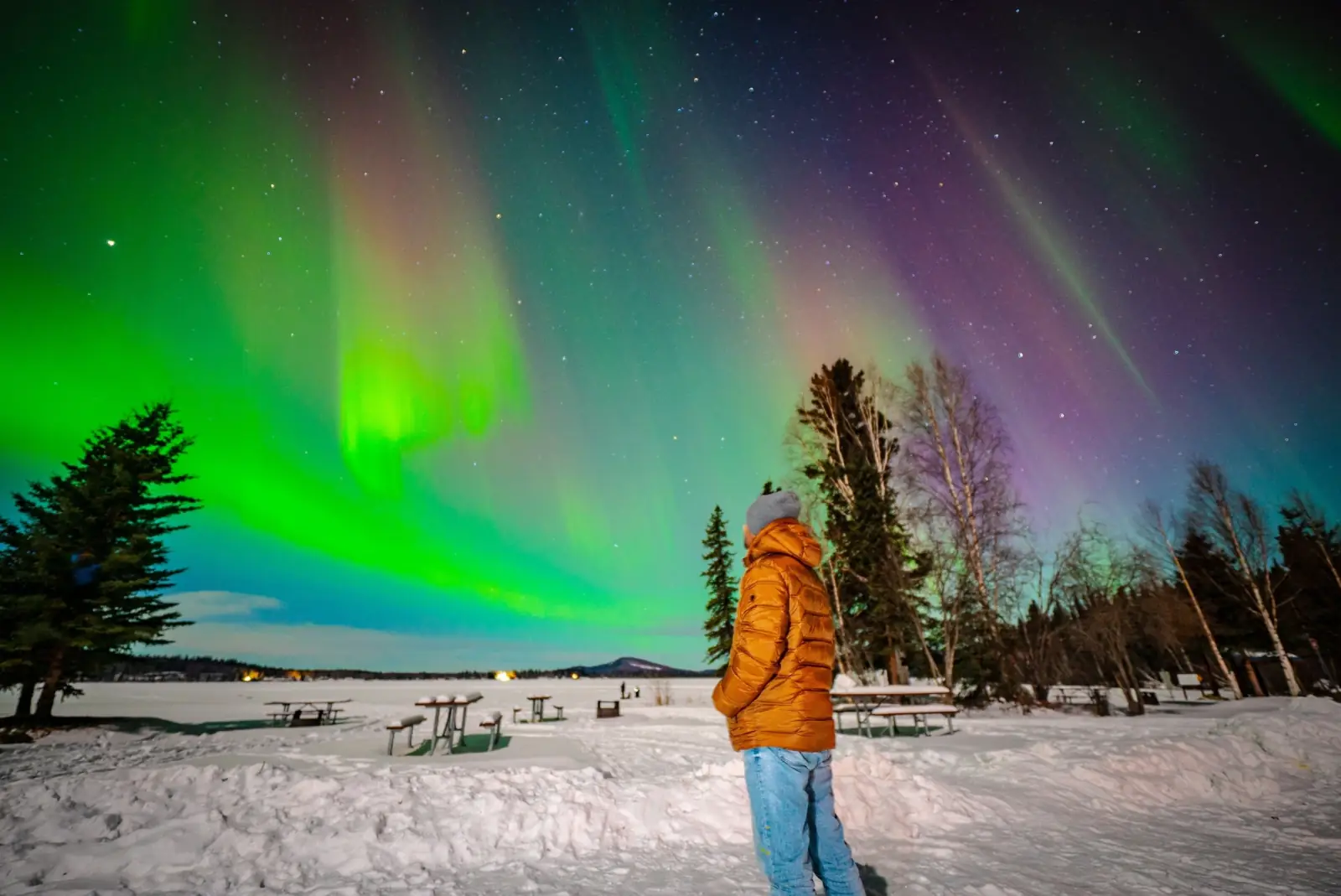 What to wearDress for an Interior Alaska nightAurora GuaranteeWhat happens if the sky doesn't cooperate
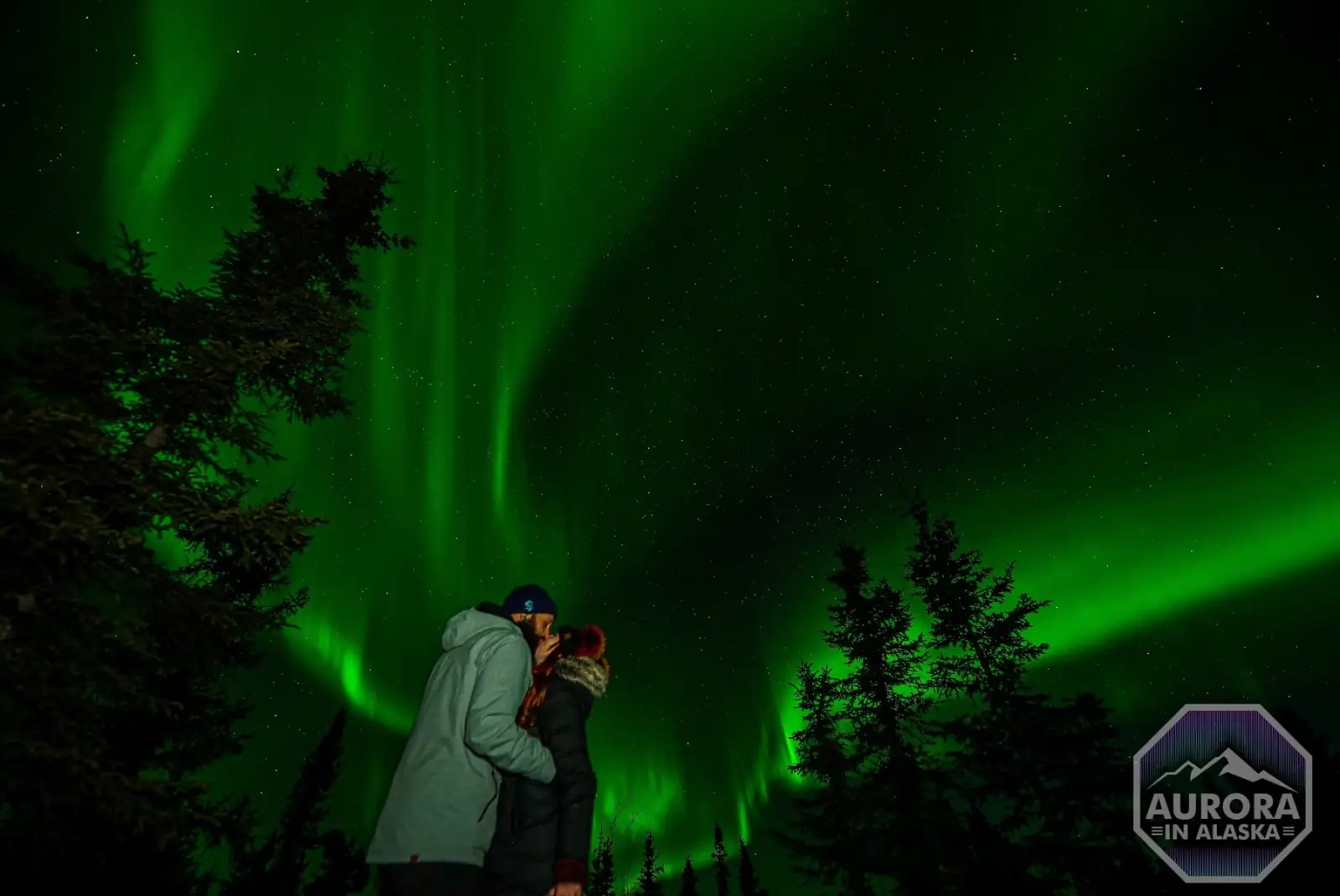 Your photosPortraits under the aurora, included
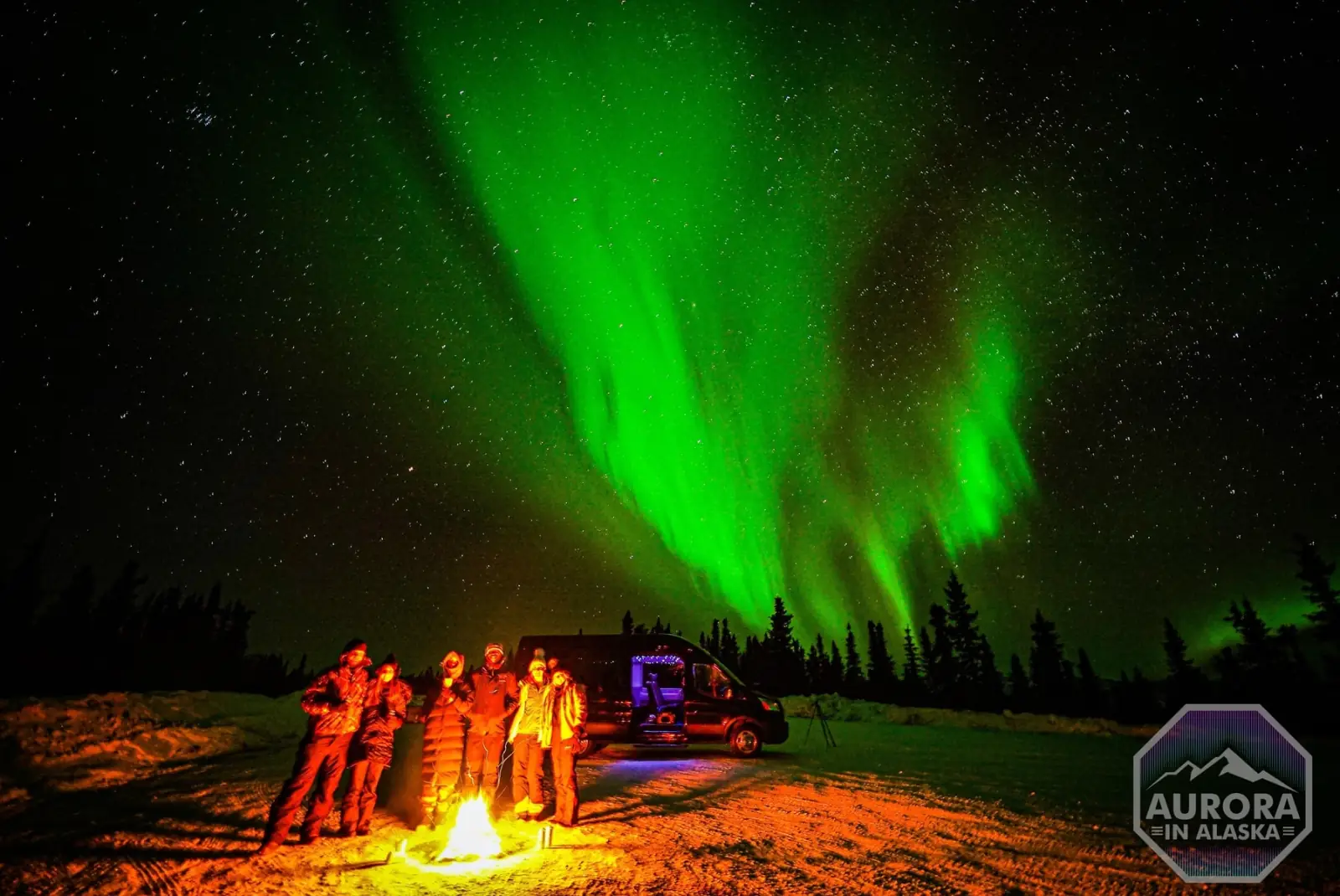 QuestionsStraight answers before you book
Fairbanks, Alaska · 64.8° N
Ready when the sky is.
Questions before you book? Call or text a real person at (907) 931-4000.